Table of Contents
Decoding ‘Exchange Transfer Funds’: What Are ETFs?
If you’re searching for “exchange transfer funds,” you’ve landed in the right place, even if the terminology is slightly off. In the financial world, what you’re looking for are Exchange-Traded Funds (ETFs). This guide for 2026 will clarify this common point of confusion, explain exactly what ETFs are, how they work, and how you can strategically use them to build a powerful investment portfolio. We’ll cover everything from the basic definition to advanced risk analysis, providing a clear path to making your first ETF investment.
The Simple Definition of an Exchange-Traded Fund (ETF)
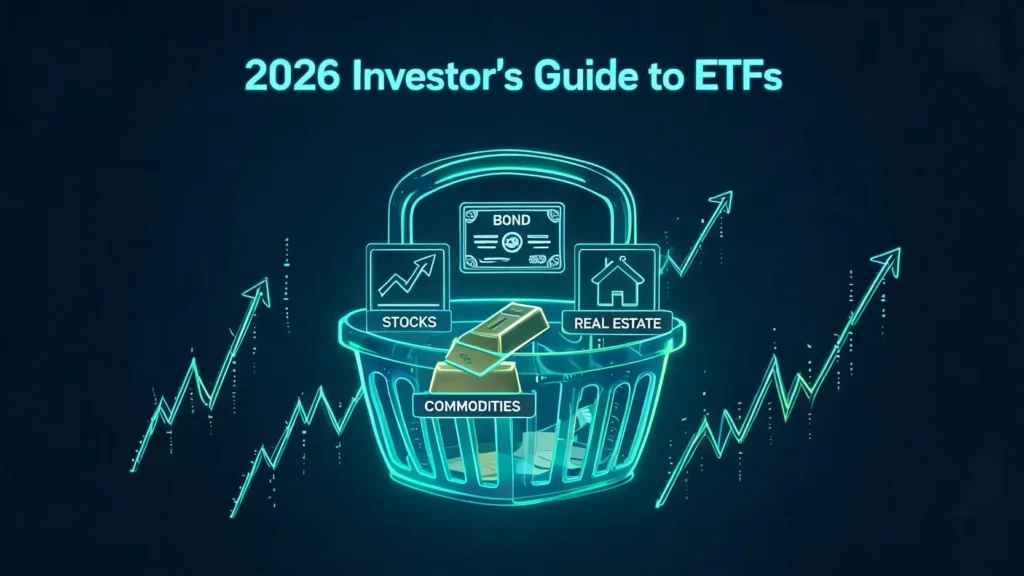
An Exchange-Traded Fund is an investment fund that holds a collection of assets, such as stocks, bonds, or commodities. Think of it as a basket containing dozens or even thousands of different securities. When you buy a share of an ETF, you are buying a small piece of that entire basket. These shares are traded on major stock exchanges—like the New York Stock Exchange or Nasdaq—just like the stock of a single company, such as Apple or Microsoft.
Why Your Search Points to ETFs
The term “exchange transfer funds” is a logical, descriptive guess. ETFs are funds whose shares you can buy and sell (transfer) on a stock exchange. While it’s not the official industry term, it perfectly captures the essence of how these instruments operate. This guide will use the correct term, ETF, moving forward, but know that your initial intuition was on the right track.
The Core Mechanics: How Do ETFs Actually Work?
Understanding the mechanism behind ETFs is key to appreciating their benefits, particularly their efficiency and low cost. Two core concepts define their operation: the creation/redemption process and intraday trading.
The Creation and Redemption Process Explained
Unlike mutual funds, investors don’t buy shares directly from the ETF provider. Instead, a special mechanism involving institutional investors called “Authorized Participants” (APs) keeps the ETF’s share price in line with the value of its underlying assets. The AP can create new ETF shares by delivering the basket of underlying assets to the fund, or redeem shares by exchanging them for the assets. This process, as outlined in guidelines from regulatory bodies like the S.E.C., is crucial for maintaining price stability and is a key reason ETFs are so efficient.
Trading Like a Stock: The Power of Intraday Liquidity
The most significant feature of an ETF is its ability to be traded throughout the day at changing prices. This is known as intraday liquidity. You can buy shares in the morning and sell them in the afternoon. This flexibility also introduces a real-world cost that investors must be aware of: the bid-ask spread. This is the small difference between the highest price a buyer is willing to pay (the bid) and the lowest price a seller is willing to accept (the ask). For highly traded ETFs, this spread is negligible, but for more niche funds, it can be a hidden cost of trading.
A Panorama of Choices: The Main Types of ETFs for Your 2026 Portfolio
ETFs offer a vast universe of investment opportunities. Here are the primary categories you will encounter:
- Stock (Equity) ETFs: These track a specific stock index. They are the most common type and are used to gain broad exposure to the market. Examples include the SPDR S&P 500 ETF Trust (SPY), which tracks the S&P 500, and the Invesco QQQ Trust (QQQ), which tracks the Nasdaq-100.
- Bond (Fixed-Income) ETFs: These provide exposure to various types of bonds, such as government, corporate, or municipal bonds. They are often used to generate income and add stability to a portfolio. A popular example is the iShares Core U.S. Aggregate Bond ETF (AGG).
- Commodity ETFs: These invest in physical commodities like gold, oil, or agricultural products. They allow investors to speculate on or hedge against price movements in these raw materials. The SPDR Gold Shares (GLD) is a well-known example.
- Sector and Thematic ETFs: These focus on specific industries (e.g., technology, healthcare, energy) or investment themes (e.g., artificial intelligence, renewable energy, cybersecurity). They allow for more targeted investment strategies.
ETFs vs. Mutual Funds: A Head-to-Head Comparison for 2026
For decades, mutual funds were the go-to option for diversified investing. Today, ETFs offer a compelling alternative. Here’s a direct comparison:
| Feature | Exchange-Traded Funds (ETFs) | Mutual Funds |
|---|---|---|
| Trading | Traded throughout the day on an exchange at fluctuating prices. | Priced once per day at the Net Asset Value (NAV) after the market closes. |
| Expense Ratios | Generally lower, with many passive index ETFs below 0.10%. The 2026 average for passive equity ETFs is exceptionally low. | Typically higher due to management and operational costs. Actively managed funds can exceed 1.00%. |
| Tax Efficiency | Generally more tax-efficient. The in-kind creation/redemption process avoids triggering most capital gains distributions for shareholders. | Can generate annual capital gains distributions for shareholders as the manager sells securities, creating a potential tax liability. |
| Transparency | High. Holdings are typically disclosed daily. | Lower. Holdings are usually disclosed quarterly or semi-annually. |
| Minimum Investment | As low as the price of a single share. | Often requires a higher initial minimum investment (e.g., $1,000 or more). |
Beyond the Basics: Understanding Key Risks in ETF Investing
While ETFs offer many advantages, they are not without risk. A sophisticated investor understands the nuances beyond simple market fluctuations.
Market Risk
This is the most straightforward risk: the value of your ETF will fall if the underlying assets it holds lose value. If you own an S&P 500 ETF and the S&P 500 index declines, the value of your investment will also decline.
Tracking Error
An ETF is designed to track a specific index, but it doesn’t always do so perfectly. Tracking error is the difference between the ETF’s performance and the index’s performance. Factors like fees, cash drag, and the fund’s sampling strategy can cause this divergence. While usually small, it’s a critical metric for evaluating how well a fund is doing its job.
Liquidity Risk and the Bid-Ask Spread
As mentioned earlier, the bid-ask spread is a transaction cost. For ETFs with low trading volume or that hold illiquid assets, this spread can widen significantly. This means the price you pay to buy could be much higher than the price you receive to sell, impacting your returns. Always check the average daily trading volume and the live spread before investing in a less common ETF.
Your First ETF Investment: A 5-Step Action Plan for 2026
Ready to get started? Here is a step-by-step guide to making your first ETF investment.
- Step 1: Select a Beginner-Friendly Brokerage Platform. To buy an ETF, you need a brokerage account. For 2026, leading platforms for beginners known for low fees and user-friendly interfaces include Fidelity, Charles Schwab, and Vanguard. Many offer commission-free trading on a wide selection of ETFs.
- Step 2: Define Your Investment Goal. Are you investing for long-term growth, current income, or to diversify your existing holdings? Your goal will determine the type of ETF that is right for you.
- Step 3: Use a Checklist to Research and Select the Right ETF.
- Index & Holdings: What specific index does it track? Look at the top 10 holdings to ensure you’re comfortable with the concentration.
- Expense Ratio (ER): This is the annual fee. For broad market ETFs, look for an ER below 0.20%.
- Assets Under Management (AUM): A higher AUM (ideally over $100 million) usually indicates better liquidity and stability.
- Bid-Ask Spread: Check the current spread on your brokerage platform. A tight spread is a good sign.
- Step 4: Place Your First Order: Market vs. Limit Orders.
- A market order buys or sells immediately at the best available current price.
- A limit order buys or sells at a specific price you set or better. For beginners, using a limit order is often recommended to avoid paying more than you intend, especially in a fast-moving market.
- Step 5: Monitor and Rebalance Your Portfolio. Review your investments periodically (e.g., annually) to ensure they still align with your financial goals.
Frequently Asked Questions (FAQ)
What is the primary risk of investing in an ETF?
The primary risk of an ETF is market risk. Since an ETF holds a basket of securities, its value is directly tied to the performance of those underlying assets. If the market or sector the ETF tracks declines, the value of the ETF will also decline.
How do you make money from an exchange-traded fund?
There are two main ways to make money from an ETF. The first is through capital appreciation, where the price of the ETF shares increases and you can sell them for a profit. The second is through dividends or interest payments that are collected from the stocks or bonds held within the ETF and distributed to shareholders.
Can I start investing in ETFs with a small amount of money?
Yes, absolutely. One of the biggest advantages of ETFs is their accessibility. You can start by buying just one share of an ETF, which could cost anywhere from under $50 to a few hundred dollars. Furthermore, many brokerage platforms now offer fractional shares, allowing you to invest with as little as $1.