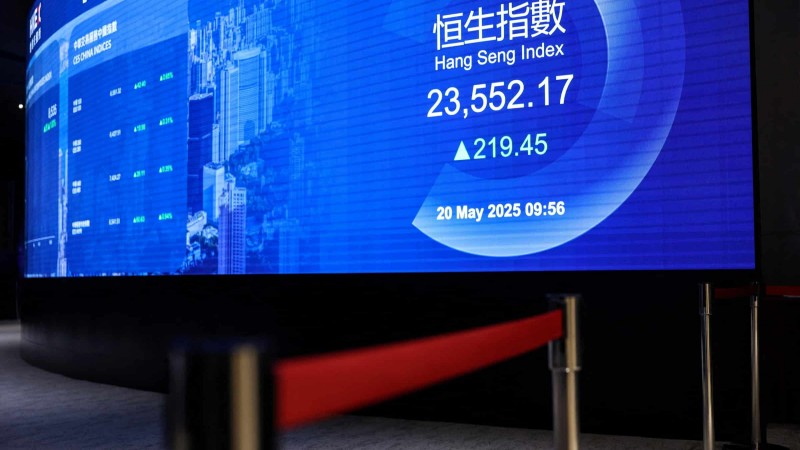
The Hang Seng TECH Index (HKTECH) has been a source of immense frustration for investors throughout 2026. While global equity markets—particularly those in the US and AI-heavy geographies—have surged on the back of massive capital expenditure, the HSTECH has consistently lagged, marred by a negative year-to-date return.
While retail investors may interpret recent minor bounces as a sign of a turnaround, experienced market participants recognize this as a classic value trap. The thesis for a Strong Short relies on a fundamental structural mismatch: the index is trapped in legacy consumer sectors at a time when global capital is aggressively rotating into high-growth, upstream AI infrastructure.
In the following outlook, we cover why HSTECH (HKTECH) remains a prime candidate for short exposure.

Table of Contents
1. Fundamental Analysis: Why the Bearish Outlook Persists
1.1 The “AI Compute Deficit”
The primary driver of 2026 global equity performance has been Artificial Intelligence (AI) capital expenditure. Unfortunately, the HSTECH is structurally “AI-light.”
- The Mismatch: Over 50% of the index is concentrated in application-focused internet giants (social media, e-commerce, and food delivery) and another 15% in Electric Vehicles (EVs). Less than 20% is geared toward AI compute hardware, semiconductors, or server infrastructure.
- The Reality: As long as global capital continues to chase AI-laden geographies (like the US, South Korea, and Taiwan), the HSTECH will struggle to find a sustained bid.
Investors are paying a premium for growth, and HKTECH’s current composition simply does not deliver that.
1.2 Domestic Consumption Headwinds
The index’s heavy weighting toward consumer-facing platforms means its success is tethered to China’s domestic consumption.
Muted consumer spending, tapering government subsidies, and hyper-competitive pricing wars in the e-commerce and EV sectors have severely compressed profit margins. While there is talk of “the worst being behind us” regarding price wars, the lack of a clear, robust recovery in consumer confidence makes any rally in these stocks inherently fragile.
1.3 The “Liquidity Squeeze”
The HKTECH is currently facing a tighter liquidity environment than in previous years. Funding demand scale for the Hong Kong market remains high, and IPO lock-up expirations are posing potential funding pressure.
Because the market has become increasingly segmented, allocation strategies favor sectors experiencing active credit expansion, leaving consumer-reliant tech names at a disadvantage.
Without a significant influx of new foreign institutional capital, the index lacks the fuel for a meaningful breakout—a reality made even more apparent when compared to the lackluster performance of the broader Hang Seng Index benchmark.
2. Technical Outlook: HSTECH Index
Beyond the fundamental outlook, the technical structure of the HKTECH index reveals the prevailing sentiment of major institutional investors. While tech-heavy indices like Japan’s Nikkei 225 and South Korea’s KOSPI have hit record highs, the HKTECH remains firmly entrenched in an official bear market.
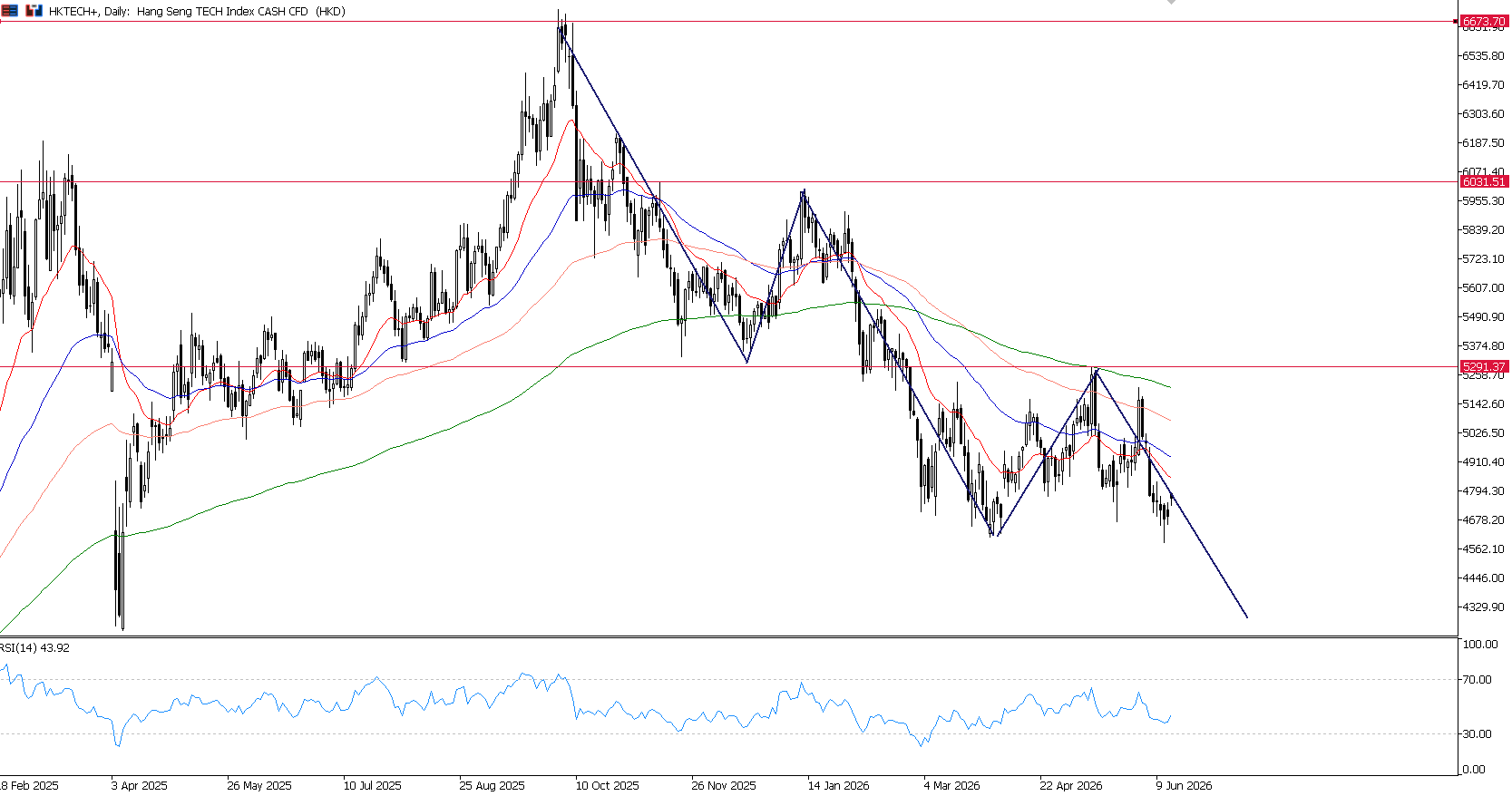 HKTECH, Daily Chart Analysis
Technically, the HKTECH is in a long-term corrective phase. Recent bounces have struggled to maintain momentum, confirming that institutional sellers are using relief rallies as opportunities to exit positions.
Market price action remains the most direct reflection of investor conviction, and the current trend is indisputably bearish.
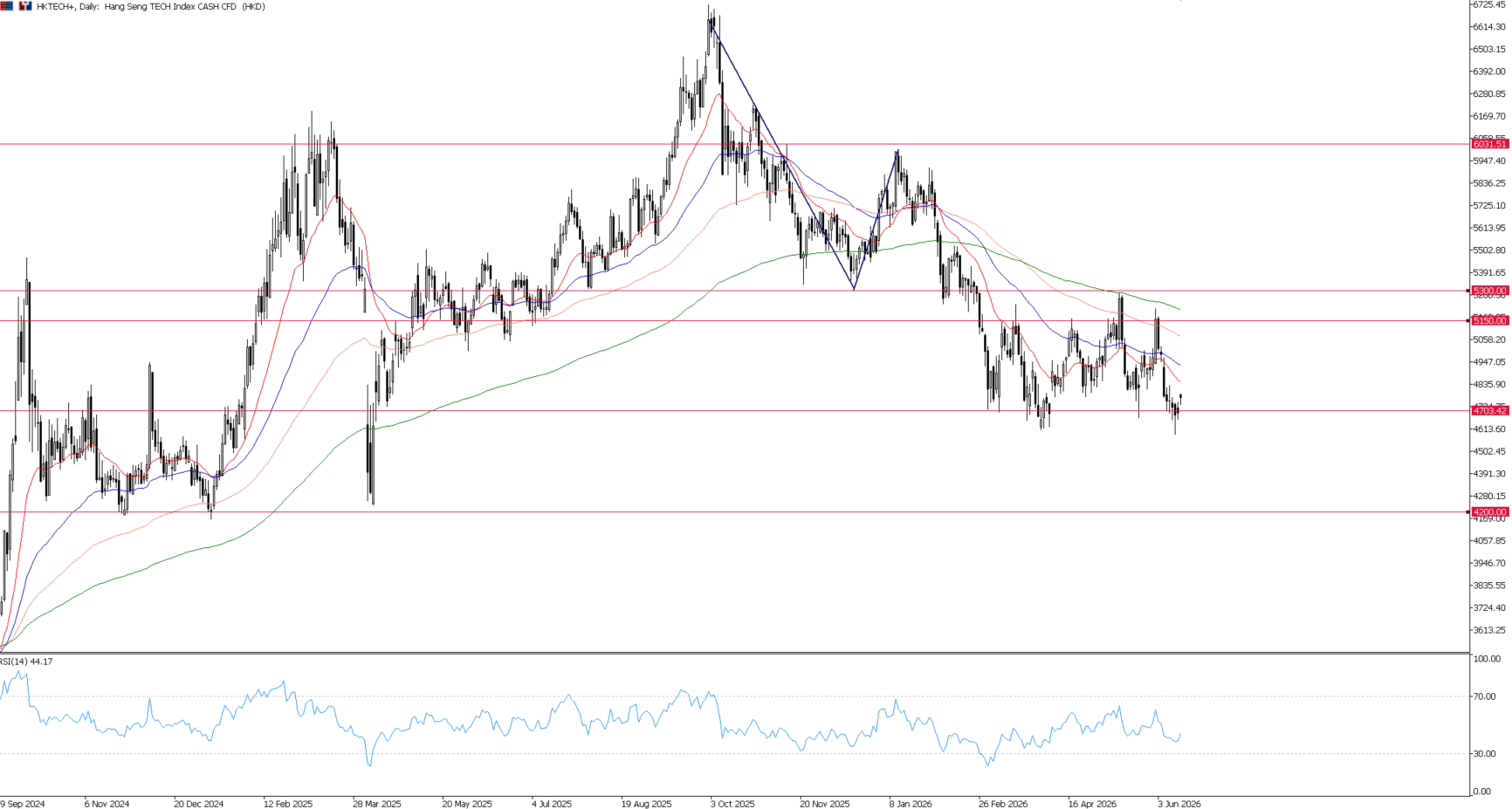 HKTECH, Daily Chart Analysis
- The 5,150 – 5,300 Ceiling: The index continues to face heavy resistance at this level. Every approach to this zone has been met with fresh selling, signaling a persistent “sell-the-rally” mentality among major players.
- The Support Breakdown: Should the index decisively break and hold below the 4,700 support floor, the technical setup will shift into an aggressive bearish continuation, targeting the 2025 lows.
3. Trading Insights for HKTECH
For this shorting opportunity, look to enter positions when the index tests overhead resistance. The goal is to fade the rallies that are fueled by short-covering, rather than chasing the market lower after a sell-off.
- Direction | Strong Short: Betting on structural AI deficit and domestic consumption headwinds, and technically bearish structure.
- Entry Setup 1 | 5,150 – 5,300 area: Short into relief rallies near major psychological resistance.
- Stop Loss | Above 5,400: A daily close above this level invalidates the bearish thesis.
- Entry Setup 2 | 4,700 Breakdown: Trade on the technical breakdown (Short-term momentum).
- Stop Loss | Above 4,800: Regaining this level would suggest a false breakdown.
Strategic Note: The first entry setup aims to short the “bear rebound,” a strategy tailored for swing traders looking to capitalize on price exhaustion. The second entry setup is designed for short-term momentum traders who prefer to capitalize on technical breakdown velocity.
- Target 1 | 4,200: 2025’s Low, consider a major support
- Target 2 | 4,000: Psychological Round number usually pose as strong “magnet”.
The Bottom Line (Summary)
The Hang Seng TECH Index is currently a “value trap” missing the fundamental engine—AI infrastructure—that is driving the 2026 global bull market. Until the index can successfully pivot its composition toward higher-growth, pure-play AI constituents, or until a massive, sustained recovery in Chinese consumer sentiment occurs, the path of least resistance remains to the downside.
Traders should continue to treat any broad-market rally as an opportunity to build short exposure into overhead resistance.