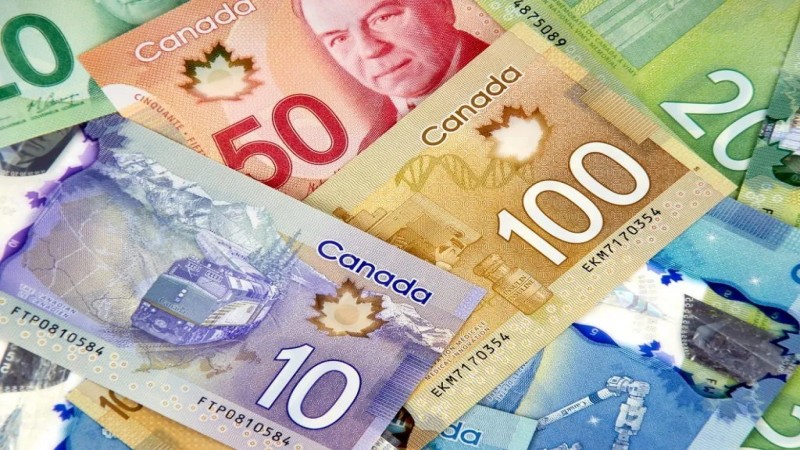
For decades, the City of London and Wall Street traded the Canadian Dollar (the “Loonie”) on a shockingly simple heuristic: If the price of Brent goes up, you buy the CAD. Canada is a glorified petro-state, after all.
But as we slog through 2026, the algorithmic trading desks have noticed something terrifying. Geopolitical tensions in the Middle East have pushed crude oil higher, yet the Canadian Dollar has completely failed to catch a bid. In fact, it is plunging.
The traditional “Petro-Currency” thesis is dead.
The institutional money is aggressively shorting the Loonie, and it has nothing to do with oil barrels. It has everything to do with a rotting domestic economy, an impending mortgage crisis, and a central bank that has entirely lost control of the narrative.
Here is the grim reality of why the smart money is abandoning Canada, and why the CAD is plunging into the abyss.
Table of Contents
1. The Oil Disconnect: When the Lifeline Snaps
Historically, a spike in oil prices meant a massive influx of capital into the Canadian energy sector, propping up the currency.
Not anymore. Recent market reports tell a brutal story: crude oil spiked, the CAD saw a pathetic, short-lived bounce, and then immediately rolled over and resumed its death march.
The Message from the Market is Clear: The structural rot within the Canadian economy is now so severe that even a commodities windfall cannot paper over the cracks. Traders aren’t looking at export revenues; they are looking at a hyper-leveraged consumer base and a dying real estate Ponzi scheme. When a commodity currency stops responding to its underlying commodity, you know the systemic decay has reached terminal velocity.
2. The Yield Gap and the “Soft” Economy
The analysts in Mayfair are whispering a specific word when describing Canada’s outlook: Soft. We prefer a different word: Comatose.
Canadian GDP growth is utterly anaemic. Inventories are piling up, and corporate investment has ground to a halt. The Bank of Canada (BoC) is trapped. They cannot tighten policy any further without detonating their domestic housing market, leaving them entirely powerless as inflation pressures persist.
This creates the ultimate nightmare for a currency: The Yield Differential.
The US Fed: Maintaining higher rates, backed by relatively robust (albeit debt-fuelled) consumption.
The BoC: Paralysed, inching towards dovish capitulation.
Capital is mercenary.
Why hold Canadian paper with negative real yields when you can cross the border and buy US Treasuries? The Loonie is currently behaving like a hostage to US economic data.
Every time US retail sales beat expectations, the Dollar spikes and the CAD is taken to the slaughterhouse. Shorting the CAD isn’t a trade on Canada; it is simply the easiest way to be long the US Dollar.
3. The Sovereign Exodus: A Fatal Long-Term Signal
Forget the day-traders; look at the sovereign wealth funds and central banks.
Quietly, the global proportion of foreign exchange reserves held in Canadian Dollars is shrinking. Official institutions are dumping the Loonie.
Who is buying Canadian debt instead? Highly leveraged, fast-money hedge funds. The capital structure has shifted from stable, long-term state actors to jittery speculators who will dump their positions the second the volatility index (VIX) twitches.
When central banks stop treating your currency as a safe store of value, your status as a “Major” currency is effectively over. The CAD is being relegated to the minor leagues of global finance.
4. The Real Estate Elephant in the Room
Let’s stop beating around the bush. The Canadian economy is essentially three mining companies in a trench coat, propping up a gargantuan, grossly over-leveraged housing bubble.
Canadian households are drowning in debt. As interest rates remain elevated, the mortgage renewal cliff approaches. The banks are heavily exposed to a domestic market where consumers can no longer afford to consume.
If you are long Canadian equities, you are long a zombie banking sector and a property market built on sand.
The Bottom Line
The market isn’t shorting the Canadian Dollar because they think Canada is going bankrupt tomorrow. They are shorting it because, in a world starved for yield and growth, Canada offers absolutely nothing.
It lacks the technological engine of the US, it lacks the high-yield appeal of emerging markets, and it has lost its historical petro-currency premium. It is a hollowed-out economy waiting for the mortgage piper to be paid.
The institutional money is fleeing south to US growth assets and US cash. Unless the Bank of Canada magically finds a way to print affordable housing without triggering hyperinflation, the Loonie is headed for the scrapheap.