In a volatile market, tangible assets are king. Resource ETFs offer a powerful way to invest in the planet’s essential materials, from energy to metals. For investors seeking natural resources ETF options, these funds provide a diversified and accessible entry point. This guide will walk you through everything you need to know about etf resources, from what they are to which ones you should watch in 2026.
Table of Contents
What Exactly is a Resource ETF?
A resource ETF (Exchange-Traded Fund) is an investment fund that holds a portfolio of assets related to natural resources. Instead of buying individual stocks in mining, energy, or agricultural companies, you can buy shares of a single ETF to gain broad exposure to the entire sector. These funds are traded on stock exchanges, just like regular stocks.
Defining the Resource Sector: Beyond Just Oil and Gold
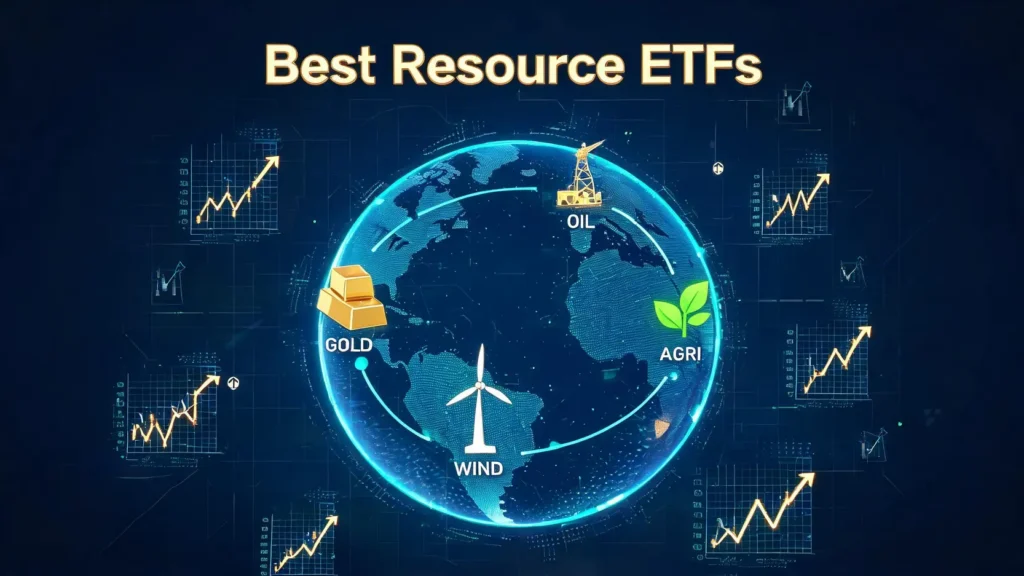
When many investors think of resources, they immediately picture oil barrels and gold bars. While these are significant, the resource sector is far broader. It encompasses a wide range of tangible assets, including:
- Energy: Crude oil, natural gas, coal, and increasingly, renewable sources like solar and wind.
- Metals: Precious metals like gold and silver, as well as industrial metals such as copper, aluminum, and lithium.
- Mining: The companies responsible for extracting the metals and minerals from the earth.
- Agriculture: Commodities like corn, wheat, soybeans, and livestock.
- Timber and Forestry: The cultivation and harvesting of wood products.
- Water: Companies involved in water treatment, utilities, and infrastructure.
Why Should You Consider Investing in Resource ETFs?
Investing in resource ETFs can be a strategic move for several reasons, particularly as an inflation hedge and a tool for diversification. Historically, the prices of hard assets and commodities tend to rise with inflation, protecting the purchasing power of your investment. Because commodity prices often move independently of stock and bond markets, adding a natural resources ETF to your portfolio can reduce overall volatility and improve risk-adjusted returns.
Exploring the Main Types of Resource ETFs Available
Resource ETFs are not a one-size-fits-all investment tool. They vary by the assets they hold and their geographical focus, allowing investors to tailor their exposure to specific market views.
Broad-Based vs. Sector-Specific
Broad-Based Resource ETFs offer diversified exposure across multiple resource categories, such as energy, metals, and agriculture, all within a single fund. These are often benchmarked to indices like the S&P Global Natural Resources Index. They are an excellent option for investors who want general exposure to the sector without betting on a specific commodity.
Sector-Specific ETFs, on the other hand, concentrate on a single area. For example, you can find ETFs that focus exclusively on oil and gas companies, gold miners, clean energy, or agricultural commodities. These are suitable for investors with a strong conviction about a particular part of the resource market.
Geographic Focus: Global, North American, and Australian Resource ETFs
The geographical exposure of a resource ETF is another critical factor. A Global ETF invests in companies worldwide, providing broad diversification. A North American ETF focuses on companies in the U.S. and Canada, while an Australian Resource ETF would target Australia’s dominant mining and materials industry. The choice depends on an investor’s desire to tap into specific regional growth stories or mitigate geopolitical risk.
How to Analyze and Choose the Right Resource ETF
Selecting the right resource sector ETF requires careful analysis of several key factors beyond just its recent performance. Understanding these metrics is crucial for making an informed investment decision.
Key Metrics: Understanding Expense Ratio, AUM, and Trading Volume
- Expense Ratio: This is the annual fee charged by the fund, expressed as a percentage of your investment. A lower expense ratio is always better, as it eats less into your returns over time.
- Assets Under Management (AUM): AUM represents the total market value of the assets a fund manages. A higher AUM generally indicates a more established and trusted fund with better liquidity.
- Trading Volume: This metric shows how many shares are traded daily. High trading volume ensures liquidity, meaning you can easily buy or sell the ETF at a fair market price without significant price discrepancies (spreads).
Digging into the Holdings: What Companies Are You Actually Buying?
Never judge an ETF by its name alone. It is essential to look ‘under the hood’ at the ETF’s top holdings, which are listed on the fund provider’s website (like iShares or VanEck). This will reveal which companies you are actually investing in and their weight within the portfolio. This helps you avoid over-concentration in a single company and ensure the ETF’s strategy aligns with your investment goals.
Index Tracking: How Well Does the ETF Match its Benchmark?
Most ETFs are designed to track a specific benchmark index. ‘Tracking error’ measures how much the ETF’s performance deviates from its index. A well-managed ETF will have a very small tracking error, indicating it is effectively replicating the index’s returns. This information is typically available in the fund’s prospectus or on its fact sheet.
A Curated List of Top Resource ETFs to Research in 2026
Here is a comparison of several resource ETFs that offer different types of exposure. This table provides a starting point for your own research.
| ETF Ticker | Fund Name | Expense Ratio | Primary Sector Exposure |
|---|---|---|---|
| GNR | SPDR S&P Global Natural Resources ETF | 0.40% | Diversified (Energy, Metals, Agriculture) |
| IGE | iShares North American Natural Resources ETF | 0.41% | North America Energy & Mining |
| MVR | VanEck Australian Resources ETF | 0.35% | Australian Mining & Minerals |
| XLB | Materials Select Sector SPDR Fund | 0.10% | U.S. Materials & Chemicals |
Frequently Asked Questions (FAQ)
- What is the best ETF for investing in materials?
- The ‘best’ ETF depends on your specific investment goals. For broad exposure to the U.S. materials industry, a fund like the Materials Select Sector SPDR Fund (XLB) is a popular and low-cost choice. If you are targeting a specific sub-sector, such as precious metals or industrial chemicals, a more specialized ETF would be more appropriate.
- Are resource ETFs a good investment during high inflation?
- Historically, resource ETFs have proven to be an effective tool during periods of high inflation. As the value of currency decreases, the prices of tangible assets like energy, metals, and agricultural products tend to rise. This can help preserve and even grow the real value of an investment portfolio.
- How much of my portfolio should be in resource ETFs?
- The ideal allocation depends heavily on an individual’s risk tolerance and overall portfolio strategy. Many financial advisors suggest allocating between 5% and 10% of a portfolio to commodities or resource-based assets to achieve meaningful diversification benefits without taking on excessive risk.
Conclusion
Resource ETFs provide a crucial and accessible way to gain exposure to the foundational assets of the global economy. By understanding the different types, evaluating them based on key metrics like expense ratios and holdings, and aligning them with your financial goals, you can make an informed decision to strengthen and diversify your investment portfolio. Start by exploring the ETFs mentioned in this guide to see which aligns with your financial goals for 2026 and beyond.